
Green’s panda photo from bamboo forest in China to gain worldwide exposure in National Geographic
Submitted photo
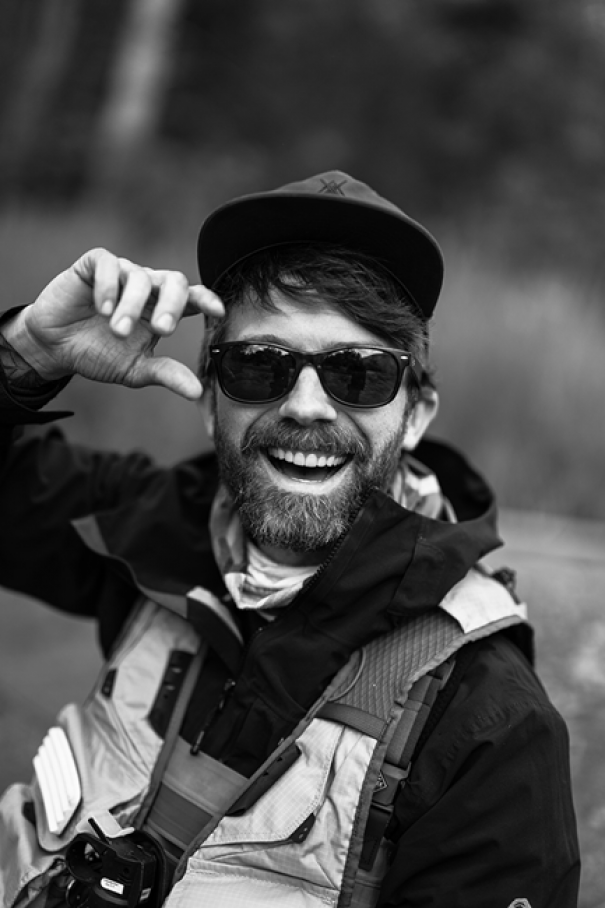
Brandon native Rob Green lives in Montana with his wife and 1-year-old son.
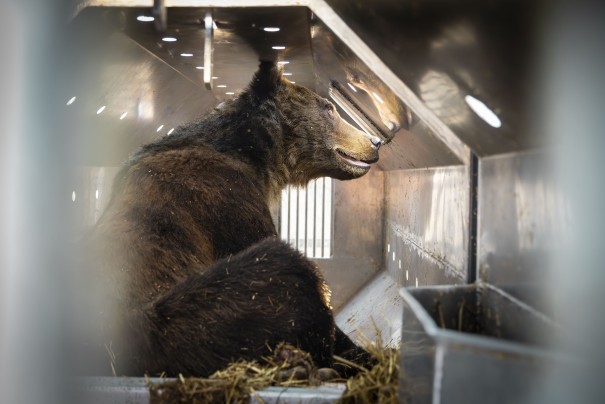
A grizzly bear slips under a barbed wire fence in search of food for her young. As more people move into historic grizzly bear habitat, conflict has become more frequent as human food sources like trash or pet food provide easy calories for scavenging wildlife.
Photo by Rob Green
When Rob Green left Brandon seven years ago for the mountains of Montana, he wasn’t chasing fame. He was chasing something that had been tugging at him for years.
Today, the Brandon native has become a National Geographic Explorer, documentary photographer and filmmaker whose work has taken him from grizzly bear country in the American West to the bamboo forests of China and rural communities in Africa.
“I feel very fortunate to be doing some of the work that I’m doing,” Green said by phone from his home in Missoula, Mont., where he lives with his wife, Robyn, a physician assistant, and their 1-year-old son, Wilson.
Although Green’s career path has taken him around the world, it wasn’t the one he envisioned when he graduated from Augustana University.
He studied journalism, but after college, he continued operating Circuit, the martial arts school in Brandon that he relied on to help pay his way through school. The business was successful, and Green spent years teaching and running the school before realizing that a passion remained unfulfilled.
“That itch never got scratched,” he said. “There was this constant nagging, this little part of me that was always trying to get back into journalism, especially conservation journalism.”
Eventually, he faced a decision.
“Are you going to stay here and keep doing this thing, or are you going to follow this passion that you’ve been trained to do?” Green recalled.
Leaving the martial arts school was difficult, but he felt comfortable turning it over to his sister, Tate, who has continued to grow the business.
Moving to Montana proved transformative. Green connected with accomplished photographers and editors who became mentors and helped him refine both his craft and his approach. Those relationships eventually led to collaborations with National Geographic and other major publications, which was both surreal and humbling.
“Working with National Geographic has been in many ways a dream come true,” he said. “But it’s not a finish line. If anything, it is an amplifier.”
He views photography as a tool for helping people understand complex issues.
“I like complexity,” he said. “We wish the world were black and white, and the truth is it is not.”
Many of his projects explore difficult and sometimes controversial topics, including grizzly bear conflicts, wolf management and wildland firefighting.
Green has embedded with elite wildfire crews to document the physical and emotional demands they face as fires become larger and more dangerous.
“What do we owe these people who are doing all this work?” he asked. “Using photography encourages people to dig a little bit deeper into what they think surrounds them and what they think their community actually looks like.”
Though his work often places him in remote areas among bears, wolves and wildfires, Green insists he is anything but a thrill seeker.
“I am incredibly risk averse,” he said. “One of the best ways to get through some of that risk is to do a lot of risk management and spend time studying, training, preparing and asking the right questions.”
A panda prize
One of Green’s most celebrated images earned a World Press Photo Award this year and will appear in the August issue of National Geographic. This will be his first image to appear in the magazine’s print edition.
The photograph features a wild giant panda in China’s Wanglang National Nature Reserve.
Capturing the panda in its habitat, he said, required more patience than luck.
Green was part of National Geographic Society’s U.S.-China Parks Exchange, which paired American and Chinese photographers to document conservation efforts in both countries.
With wildlife biologists and local rangers, he spent weeks searching for signs of pandas in the reserve’s dense bamboo forests.
“We’re looking for panda scat, signs and little places where they’ve recently nipped the bamboo,” he said.
After identifying an active corridor, he set up specialized camera traps.
Three months later, a panda wandered into view.
“We didn’t even know we had something until snow was already flying and those rangers had pulled the camera traps back down,” he said.
The image symbolizes more than a rare sighting. For Green, it represents years of collaboration among photographers, scientists and conservationists from two countries.
“It was awesome to see two different groups of people, two different cultures, coming together for a shared cause,” he said.
Green’s assignments have taken him to some unusual places.
He has documented food toxicology issues in Ghana and joined a team that circumnavigated the Caribbean island of Martinique unsupported on paddleboards.
Yet despite the stamps in his passport, he remains most passionate about the American West.
His work frequently focuses on conservation and coexistence between people and wildlife.
As grizzly bear populations rebound and more people move into the region, tensions are increasing.
“We’re at this turning point to decide how are we going to move forward,” Green said. “How do we make this place a healthy and thriving place for human communities while recognizing that these animals have every right to be here?”
He hopes his storytelling can help bridge divisions and encourage thoughtful conversations.
Though Green no longer teaches martial arts, he credits those years with shaping his career path.
“The mindset and those habits that were formed when I was running the martial arts school have been integral to the success that I’ve had so far as a photographer,” he said.
Staying physically fit remains essential when carrying camera equipment into rugged mountain terrain.
“When you’ve got to hike up mountains carrying all that gear, being in decent shape is beneficial,” he said.
And as for his new role as a father, that has given him a new perspective.
Green said becoming a father hasn’t diminished his passion, but it has changed how he approaches his work.
“It’s all about making sure that I’m taking care of things at home before I can feel good about going out,” he said.
Not every assignment is worth leaving home for.
“What I want to do at the end of the day are projects that matter to me, not just to have a bunch of stamps on my passport,” he said.
This summer, Green will return to China to continue working with scientists studying giant pandas and red pandas.
Despite the recognition and the awards, he doesn’t see publication in National Geographic as a finish line. In anticipation of holding the August edition of the magazine in hand, he admits, “There’ll be that moment of pride or excitement, but there’s still a lot of work that I feel needs to get done, and I’m still excited to do it.”
To view Green’s award-winning panda photo, visit https://share.google/jX8waKIzZSbWAdyp3

